As the weather turns cold, every pool owner makes the same decision: close the pool for the season, or keep it open and running. Either way, the skimmer deserves special attention. It sits right at the waterline, it's the first stop for the last of the fall leaves, and in freezing climates it's one of the parts of a pool most exposed to ice. This guide walks through what to do with your skimmer in each case, how to avoid the most common winter problems, and how to get it ready again in spring.
The short answer: If you close your pool, clean out the skimmer, drop the water level as your pool or cover maker recommends, blow out and plug the skimmer line, add something to absorb ice expansion, and remove and store your skimmer guard. If you keep the pool open, keep the water at mid-skimmer, keep the pump running with freeze protection where it freezes, and keep a skimmer guard in place to stop winter leaves and storm debris at the opening.
Why the Skimmer Needs Extra Care in Winter
The skimmer is the part of your circulation system that pulls water from the surface, so it's where floating debris ends up and where water sits closest to the cold air. That creates three winter risks:
- Ice damage. Water expands as it freezes. Water left standing in a skimmer or in the line below it can crack the skimmer body or the plumbing in areas that get hard freezes.
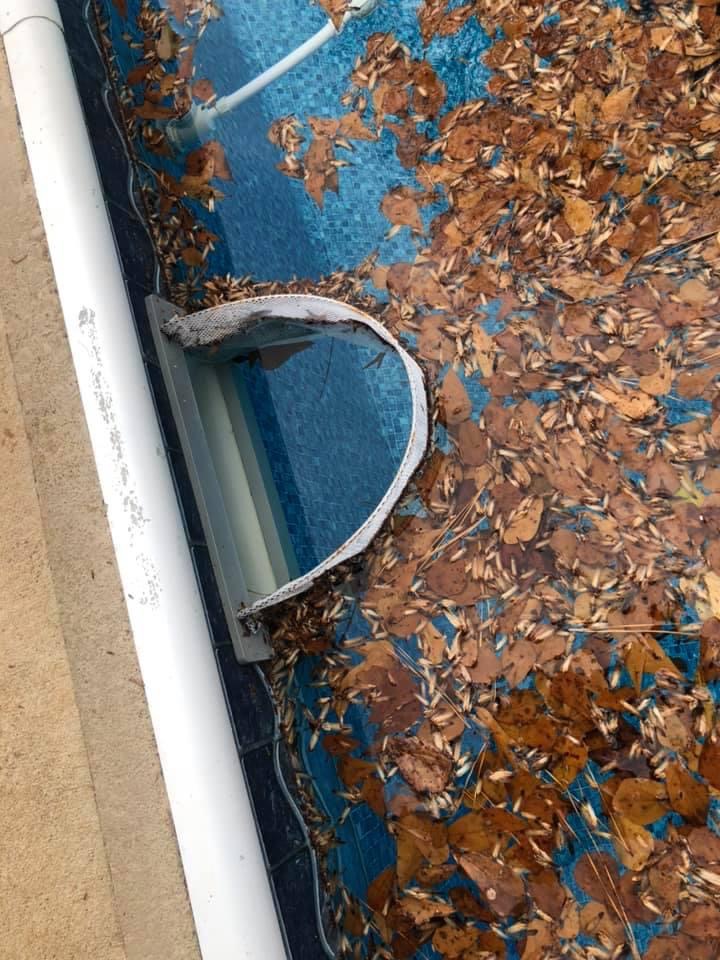
- Late leaves and storm debris. Trees keep dropping leaves well after many pools close, and winter storms bring twigs, pine needles, and seed pods. In an open pool, all of that heads straight for the skimmer.
- Lost flow when you need it most. In a pool that stays open, the pump keeps water moving to help prevent freezing. A skimmer basket packed with leaves can starve the pump of water — the same loss of suction problem you see in summer, but with higher stakes when temperatures drop.
If You're Closing Your Pool: Skimmer Winterizing Steps
Pool closing involves balancing the water, adding winter chemicals, cleaning the filter, and covering the pool. The steps below focus only on the skimmer. Always follow the instructions for your specific pool, skimmer, and winter cover — they vary by pool type and climate.
1. Clean out the skimmer before anything else
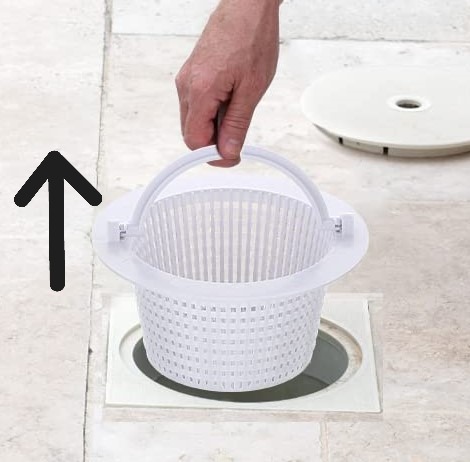
Skim the surface, then empty the skimmer basket and remove any leaves stuck around the weir door. Debris left in the skimmer over winter breaks down into a mess that stains and feeds algae by spring. If you use a skimmer guard or a skimmer sock, take it out and rinse it.
2. Remove and store your skimmer guard
When you winterize the skimmer, take the Skimmer Shield out so it isn't in the way of plugs, winterizing devices, or the cover. Squeeze the wings together and it pops right out. Rinse it off and store it with your other pool supplies so it's ready for spring.
3. Lower the water to the level your setup calls for
Many in-ground pool owners lower the water below the skimmer mouth — or below the return lines — before blowing out the plumbing. Others keep the water higher and rely on a skimmer plug and an ice-expansion device instead. There's no single right answer: it depends on your pool type, your winter cover, and how cold your winters get, so check what your pool builder or cover manufacturer recommends.
4. Blow out and plug the skimmer line
In freezing climates, the skimmer line is usually blown out with a shop vac or blower until air bubbles come out in the pool, then sealed with a winterizing plug so water can't flow back in. If your skimmer has a second port connected to the main drain, that line typically needs to be plugged too, or it will keep refilling the skimmer.
5. Give ice somewhere to go
Rain and snow can refill the skimmer even after the line is plugged. To keep freezing water from cracking it, pool owners commonly put a skimmer winterizing device (such as a Gizzmo-style insert) in the skimmer, or use a sealed, partly filled plastic bottle or a piece of pool noodle that compresses as ice forms. Some covers and above-ground skimmers use a winter faceplate or cover plate over the skimmer opening instead — follow your skimmer's instructions.
If You're Keeping Your Pool Open This Winter
In milder climates — including much of the South — many owners keep their pools open year-round. That avoids closing and opening costs, but it means the skimmer keeps working all winter, often through the heaviest leaf drop of the year.
- Keep the water level around the middle of the skimmer opening. Winter rain can raise it and evaporation or a leak can lower it. Too low and the skimmer can pull air; too high and it skims poorly.
- Keep water moving when it freezes. A running pump helps keep water from freezing in the lines. Many owners use a timer or automation system with freeze protection that turns the pump on when the air temperature drops.
- Check the skimmer after every storm and heavy leaf drop. Empty the basket and clear the opening so the pump keeps getting full flow.
- Plan for power outages. If a hard freeze comes with a power outage, your pump can't protect the lines. Know where your equipment is and what your pool professional recommends for that situation.
- Don't force anything out of ice. If the surface freezes over around the skimmer, let it thaw before pulling out the basket or guard so you don't crack the skimmer or the lid.
This is where a skimmer guard pays off. With a guard in the skimmer opening, leaves and twigs are held back at the mouth instead of packing the basket solid between your checks. You can see more ways to deal with leaf season in our guide to keeping leaves out of your pool skimmer.
Closing vs. Keeping Open: Skimmer Checklist
| Closing the pool | Keeping the pool open | |
|---|---|---|
| Skimmer basket | Empty, clean, and store or leave as your skimmer instructions say | Empty after storms and heavy leaf drop |
| Water level | Lowered as your pool or cover maker recommends | Around the middle of the skimmer opening |
| Skimmer line | Blown out and plugged in freezing climates | Water kept moving; freeze protection where it freezes |
| Ice protection | Winterizing device, sealed bottle, or noodle in the skimmer | Running pump; let surface ice thaw before servicing |
| Skimmer Shield | Remove, rinse, and store until spring | Leave it in to stop winter leaves and debris |
Getting the Skimmer Ready in Spring
When it's time to open the pool, remove any winterizing device and plugs from the skimmer, raise the water back to the middle of the skimmer opening, put the basket back in, and check that the weir door swings freely. Once the pump is primed and the skimmer is pulling water well, reinstall your Skimmer Shield. It takes under a minute and needs no tools — see the step-by-step guide for your pool type:
- Installing the Skimmer Shield in a vinyl liner or fiberglass pool
- Installing the Skimmer Shield in a concrete or gunite pool
Spring is also when pollen and new leaves arrive. If fine debris is a problem at your pool, a skimmer sock can work alongside a guard — see skimmer guard vs. skimmer sock.
The Skimmer Shield: Built for Every Season
The Skimmer Shield is a skimmer guard made by B&C Pool Products. Its patented, flexible design bows to fit into the skimmer opening and springs back to lock itself in place, and it's made from UV-resistant materials that are built to withstand sun, heat, cold, and all-season weather. That means you can leave it in all winter if you keep your pool open and don't winterize the skimmer, or pop it out when you close the pool and put it back in when you open in spring.
Install the Skimmer Shield for your pool type:
Vinyl liner & fiberglass pool install guide · Concrete & gunite pool install guide · Where to buy