You walk out to the pool and the surface is covered in leaves and bugs, but the skimmer isn't pulling anything in. The weir door barely moves, the water at the skimmer mouth looks still, and the pump sounds different than it usually does. A pool skimmer losing suction is one of the most common problems pool owners run into — and the good news is that most causes are simple to find and fix yourself.
This guide walks through how your skimmer moves water, how to narrow down where the problem is, the eight most common causes of weak or no skimmer suction (with a fix for each), and how to keep debris from choking your skimmer in the first place.
How Your Pool Skimmer Pulls Water
Your pump creates suction that pulls water from the pool through the skimmer opening. Water flows over the floating weir door, through the skimmer basket, down the suction line, through the pump's strainer basket, and on to the filter before returning to the pool. Anything that blocks or leaks along that path — from the skimmer mouth all the way to the filter — shows up as weak suction at the skimmer.
That's why the fix isn't always at the skimmer itself. Working through the path in order, starting with the easiest checks, usually finds the problem in a few minutes.
First, Narrow It Down
Before you start taking things apart, look for a few clues:
- Is it only the skimmer, or the whole system? If the return jets are still pushing water strongly but the skimmer is weak, the problem is likely at or near the skimmer (basket, weir door, water level, or the skimmer line). If the returns are weak too, look at the pump basket, filter, and suction-side air leaks.
- Check the pump strainer lid. Lots of air bubbles or a half-empty pump basket point to an air leak or low water level.
- Check the filter pressure gauge. Pressure that's well above your normal clean reading points to a dirty filter. Pressure that's lower than normal often means something is restricting flow before the pump — like a clogged skimmer basket.
8 Common Causes of Weak Skimmer Suction (and How to Fix Them)
Always turn the pump off before reaching into the skimmer or opening the pump strainer.
1. A full or clogged skimmer basket
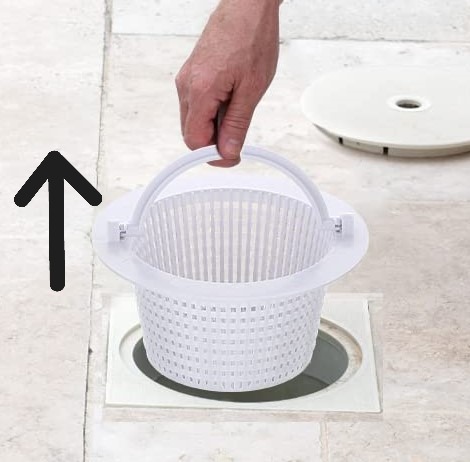
This is the number-one cause, especially in fall. Leaves, pine needles, grass clippings, and bugs pack into the basket and form a mat that water can barely pass through. Fix: Turn off the pump, lift out the basket, empty it, rinse it, and check it for cracks before putting it back. During heavy leaf drop, check the basket at least once a day.
2. A clog below the basket in the skimmer line
If the basket is cracked, missing, or was overflowing, debris can slip past it and lodge in the skimmer throat or the suction pipe. Fix: With the pump off, look down into the skimmer below the basket and pull out anything you can reach. Many pool owners then flush the line with a garden hose to push out a stubborn clog. If you can't clear it, a pool professional can blow out the line.
3. Water level too low
A skimmer works best when the water sits around the middle of the skimmer opening. If the level drops too low — from evaporation, splash-out, or a leak — the skimmer pulls in air instead of water. Air in the system can make the pump lose prime, and a pump running without water can be damaged. Fix: Turn off the pump and add water until it reaches about the middle of the opening, then restart and re-prime the pump if needed. (Water that's too high causes a different problem: floating debris passes over the skimmer instead of being pulled in.)
4. A stuck or missing weir door
The weir door is the hinged flap at the skimmer opening. It floats up and down with the water to speed up surface flow and keep debris from floating back out. If it's stuck in the up position, jammed with a stick, or lodged sideways, it can block flow into the skimmer. Fix: Clear any debris caught around the door, make sure it moves freely, and reseat or replace the float if it has come loose.
5. A full pump strainer basket
Your pump has its own strainer basket under a clear lid, and anything that gets past the skimmer basket ends up there. Fix: Turn off the pump, close any valves as your equipment requires, open the lid, and empty the basket. Before closing it, check the lid O-ring (see cause 7).
6. A dirty filter
As your filter collects dirt, pressure rises and flow through the whole system drops — including at the skimmer. Fix: Compare the pressure gauge to the reading you see right after the filter is clean. Many filter manufacturers recommend backwashing a sand or D.E. filter, or cleaning a cartridge, when pressure climbs about 8–10 psi above that clean reading. Follow your filter's manual.
7. An air leak on the suction side
Air leaks between the pool and the pump rob the pump of suction. Common signs are steady bubbles in the pump strainer basket, a pump that struggles to hold prime, or bubbles coming out of the return jets. Fix: Start with the pump lid O-ring — clean it, inspect it for cracks or flattening, lubricate it with a pool-safe O-ring lubricant, and make sure it's seated properly. Also check that the lid is tight, the drain plugs on the pump are snug, and the fittings on the suction side aren't cracked. If you can't find the leak, a pool technician can pressure-test the lines.
8. Valves set wrong
If your pool has valves that split suction between the skimmer and the main drain (or between multiple skimmers), a valve that's partly closed — or turned by someone else in the household — can starve the skimmer. Fix: Check your valve positions and open the skimmer line. If the main drain is pulling most of the water, adjusting the valve can send more flow to the skimmer.
When to call a pro: If you've cleared the baskets, cleaned the filter, topped off the water, and checked the O-ring but your pump still won't prime, you see a crack in the skimmer body, or the motor is overheating or making grinding noises, it's time to call a pool professional. Running a pump that can't move water can damage it.
How to Prevent Loss of Suction
Most skimmer suction problems start the same way: debris gets into the skimmer faster than you can clear it. A few habits go a long way:
- Keep the water level at the middle of the skimmer opening, and check it after heavy rain and during hot, dry weeks.
- Empty the skimmer and pump baskets regularly — daily during leaf season or after storms.
- Clean or backwash your filter when the pressure rises above its normal clean reading.
- Stop debris at the skimmer mouth before it reaches the basket.
That last one is where the Skimmer Shield comes in. It's a skimmer guard that sits in the skimmer opening and stops leaves, twigs, pine needles, and critters at the skimmer mouth — before they pack your basket and choke off the water your pump depends on — while its open design keeps water flowing. It's made from flexible, UV-resistant material that bows to fit the opening and locks in place on its own, with no tools, in under a minute. When it's time to clean, squeeze the wings together, clear the debris, and pop it back in.
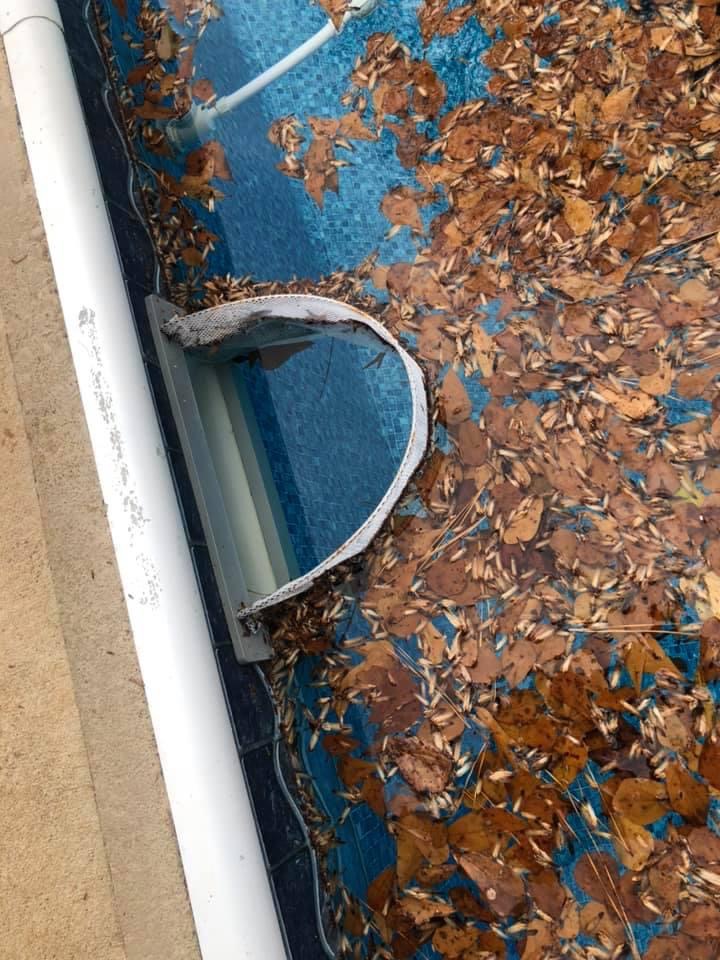
The Skimmer Shield is designed to fit most standard inground and above-ground pool skimmer openings. See the step-by-step install guide for vinyl liner and fiberglass pools or for concrete and gunite pools, or choose your pool type to watch the install video.
Quick checklist when your skimmer loses suction:
1. Empty the skimmer basket → 2. Clear the skimmer throat → 3. Check the water level → 4. Free the weir door → 5. Empty the pump basket → 6. Check filter pressure → 7. Inspect the pump lid O-ring → 8. Check your valves